
ASUS ProArt PA27UCDMR: New QD-OLED Bridges Work and Fast Gaming
Color-accurate monitors designed for photo and video work rarely offer the specs required for fast-paced gaming. ASUS’s ProArt PA27UCDMR aims[…]
Read more
Color-accurate monitors designed for photo and video work rarely offer the specs required for fast-paced gaming. ASUS’s ProArt PA27UCDMR aims[…]
Read more
After building a reputation for value-oriented gaming displays, AOC has announced its first foray into the premium QD-OLED segment. The company[…]
Read more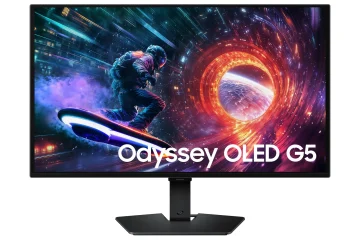
Samsung has expanded its gaming monitor lineup with the Odyssey G50SF. Starting at the equivalent of $375 in China, this 27-inch[…]
Read more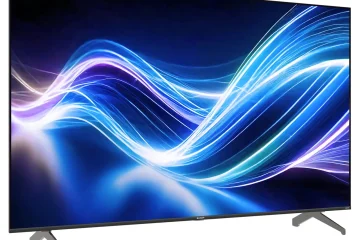
Sharp Home Electronics Company of America has launched its latest television lineup, the Sharp AQUOS QLED 4K Ultra HD Smart Xumo[…]
Read more
A few weeks ago, Samsung introduced the Odyssey G7 game displays in 27″ and 32″ sizes. The G7 displays offer[…]
Read more
Tighter margins are now causing LG Display to halve LCD production by 2020 and accelerate the shift to OLED. South[…]
Read more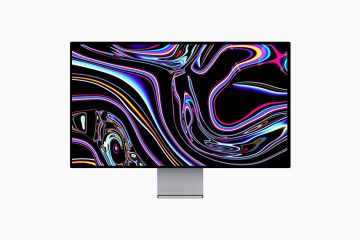
Apple is back in the display market with its brand new Pro Display XDR, a high-definition and foot-sold professional-looking model[…]
Read more
Asus and Razer are now updating their gaming laptops with interesting features, including OLED panels. This comes at the same[…]
Read more
Samsung’s QLED Q-series for 2019 promises lower latencies, automatic gaming modes and even 4K UHD in 120 Hz. Samsung invested[…]
Read more
Asus is now launching a very large gaming monitor that measures 49″ and comes with features such as AMD Freesync[…]
Read more